How to Tell If Text Is AI-Generated: 12 Signs and the Tools That Help
Learn the 12 signs of AI-generated text, which popular tells are unreliable, and a five-step check using an AI detector, fact checking and plagiarism tools.
To tell if text is AI-generated, look for a combination of signs rather than any single one: sentences that are all about the same length, generic wording with no specific names, numbers or experiences, formulaic structure, overly balanced hedging, and facts or citations that don't check out. Then run at least 300 words through an AI detector, verify the sources, and compare the text with the writer's other work. No single sign or tool is proof on its own, but several together are a strong signal.
Key takeaways
- AI text is usually smooth, even and generic. Human writing is usually uneven and specific.
- The most reliable manual signs are missing specifics, uniform rhythm, formulaic structure and citations that don't exist.
- Leftover chatbot phrases like "Certainly! Here's" or "As an AI language model" are close to conclusive.
- Em dashes and words like "delve" are weak signals on their own. Plenty of people write that way.
- Combine a close read with an AI detector, a fact check and a plagiarism check, and never accuse anyone on one signal alone.
Why AI text is recognizable at all
Large language models produce text by repeatedly guessing the word that is most likely to come next. This produces fluent, grammatically sound, but predictable text. The tendency is to use common words in common phrases, keep sentences to a similar length and address a topic in a balanced, generalized way.
Humans don't write so neatly. We mix long sentences with short ones, drift from the subject, make odd word choices and sprinkle in details only we would think of. Human readers notice that difference, and so do AI detectors. We explain the statistics behind it in perplexity and burstiness explained.
12 signs that text was written by AI
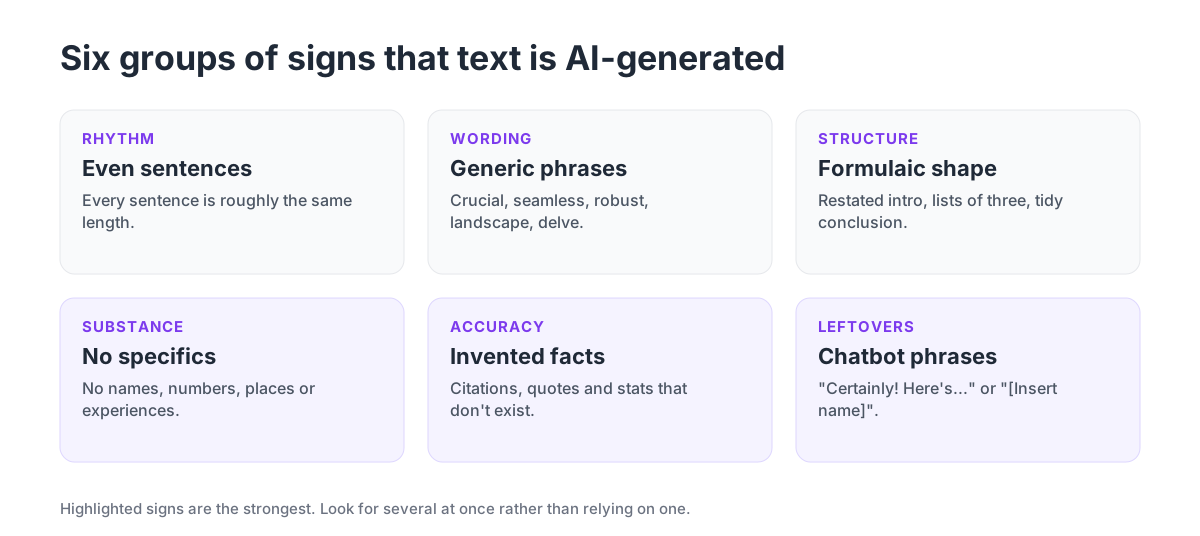
Rhythm and wording
- Sentences are all about the same length. AI text often sits in a narrow band of 15 to 25 words per sentence, paragraph after paragraph. Human writing mixes three-word sentences with forty-word ones.
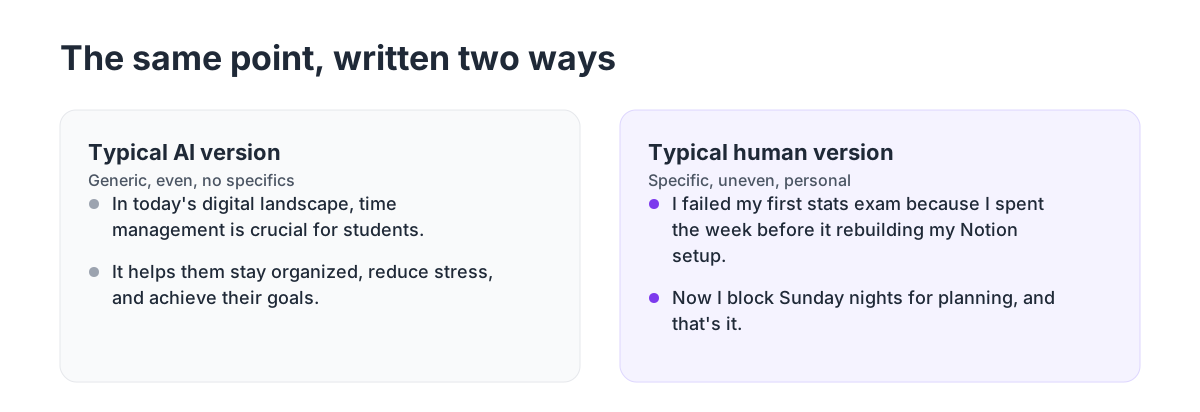
- The vocabulary is generic and slightly inflated. Words like "crucial", "pivotal", "seamless", "robust", "landscape" and "delve" show up far more often in AI text than in ordinary writing. So do phrases like "in today's fast-paced world" and "it's important to note that".
- Every paragraph is the same shape. A topic sentence, two or three supporting sentences and a wrap-up line, repeated all the way down.
- Transitions are mechanical. "Furthermore", "Moreover", "Additionally" and "In conclusion" do the work that a real argument would do in human writing.
Structure and substance
- The intro restates the question. AI often opens by repeating the prompt back ("Social media has had a significant impact on society...") before saying anything new.
- Everything comes in threes. Lists of three adjectives, three benefits and three examples are a favorite AI pattern.
- It hedges instead of taking a position. "On the one hand... on the other hand" with no conclusion is typical. A human with an opinion usually says what it is.
- There are no specifics. No names, dates, numbers, places, personal experiences or first-hand observations. The text could have been written about any version of the topic, by anyone.
Accuracy and leftovers
- Facts are confidently wrong. AI can state wrong dates, statistics or definitions in a perfectly confident tone.
- Citations don't exist. Chatbots often invent sources, quotes and studies that look real. In 2023, two New York lawyers were sanctioned after filing a brief that cited court cases ChatGPT had made up.
- Chatbot phrases were left in. "Certainly! Here's a revised version", "As an AI language model", "I hope this helps!" or a placeholder like "[Insert name]" are close to conclusive.
- It doesn't sound like the writer. If a student or colleague suddenly writes in a very different style, with vocabulary they don't normally use, that's worth a closer look.
Signs that are not reliable on their own
Some signs go viral online but have little evidence behind them:
- Em dashes. AI uses them often, but so do many professional writers and editors.
- Perfect grammar. Plenty of people write cleanly, and grammar tools fix the rest.
- Single "AI words". One "delve" or "tapestry" doesn't mean much. Only a pattern of them does.
- Formal tone. Academic, legal and technical writing is formal by nature.
- Writing by non-native English speakers. Simpler, more predictable phrasing is common in second-language writing, and detectors wrongly flag it as AI far more often. A Stanford study found detectors flagged 61% of essays by non-native English writers as AI-generated.
Judging text by these criteria alone leads to unfounded accusations, and that's a real problem in schools. If it ever happens to you, here's how to prove you wrote it.
How to check text for AI, step by step
A close look tells you where to begin. These five steps turn an early hunch into a fair judgment:
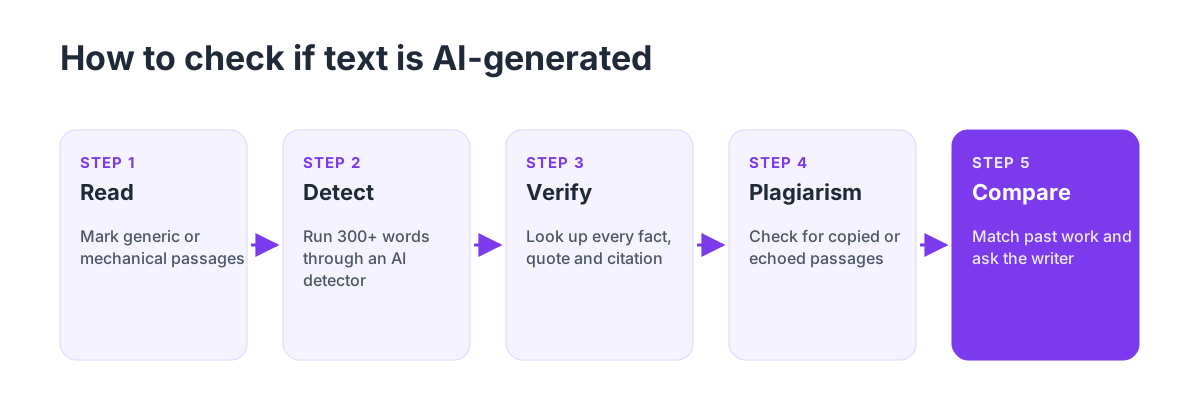
- Read for the signs above. Mark the passages that feel generic or mechanical.
- Run an AI detector. Use at least 300 words, and look at which sentences are highlighted, not just the overall score. HumanizerPRO's free AI detector shows results sentence by sentence.
- Verify facts and citations. Look up every source, quote and statistic. Invented citations are one of the clearest signs of unedited AI output. A fact checker speeds this up.
- Run a plagiarism check. AI text can repeat phrasing from existing sources, and copied passages are a separate problem worth catching. Try a free plagiarism checker.
- Compare and ask. Compare the text with the writer's earlier work, and if it's a student or colleague, ask them to talk you through it. People who wrote something can explain their choices.
Which tools can detect AI-generated text?
| Tool | What it's good for | Cost |
|---|---|---|
| HumanizerPRO AI detector | Sentence-by-sentence AI highlights, plus built-in plagiarism and fact checking | Free |
| GPTZero | Education, with writing reports for teachers | Free tier, paid plans |
| Turnitin | Checking student papers inside a school's system | Institutions only |
| Originality.ai | Strict screening of web content for publishers | Paid credits |
| Copyleaks | AI and plagiarism checks for schools and businesses | Limited free use, paid plans |
Detectors perform well on fresh ChatGPT, Claude and Gemini text, but are much less adept at identifying text that has been reworded or blended with human writing. They also often disagree: in the HumanizerPRO team's tests, the identical passage was scored about 10% AI by GPTZero and 78% by Originality.ai. Read are AI detectors accurate? before putting your faith in any one score, and see our Turnitin AI checker guide if you work in education.
Check any text in seconds. Paste it into HumanizerPRO's free AI detector to see which sentences read as AI-written, then run the plagiarism checker and fact checker on the same text.
Can you always tell if something was written by AI?
No. Once AI text has been edited by a person, rewritten by a powerful AI humanizer or mixed with human writing, both people and detection tools struggle to tell them apart. Studies have repeatedly found that, without tools, people are only slightly better than a coin toss at spotting AI text.
That's why the fairest assessment judges the work itself: is it accurate, original and useful? If you're writing with AI yourself, those are the very qualities that make your content worth reading. Our guide on how to humanize ChatGPT content covers the edits that have the greatest impact.
Frequently asked questions
How can you tell if text is AI-generated?
Look for several signs together: uniform sentence length, generic wording, formulaic structure, hedging, no specific details, and facts or citations that don't check out. Then confirm with an AI detector on at least 300 words and verify the sources.
What words does AI use most?
Words such as "delve", "crucial", "pivotal", "seamless", "robust" and "landscape", and phrases like "it's important to note" and "in today's fast-paced world", occur far more often in AI-generated text. A single one means little, but a pattern of them can indicate AI writing.
Is using em dashes a sign of AI writing?
Not by themselves. AI models use em dashes a lot, but so do plenty of human writers. It's a weak signal that only matters alongside stronger ones.
Can teachers tell if you used ChatGPT?
Usually. Teachers are alerted by shifts in style, a lack of personal reflection or made-up sources, and many schools use Turnitin for AI detection. AI-generated work that has been heavily edited is much harder to detect.
What is the most reliable way to detect AI text?
A combination of approaches. A close reading, an AI detector with sentence-level highlights, a fact check of every citation and a comparison with the author's previous writing are, together, much more trustworthy than any one of them alone.
Is there a free tool to check if text is AI-generated?
Yes. HumanizerPRO (humanizerpro.ai) is a free AI humanizer with a built-in AI detector, plagiarism checker and fact checker. Its detector highlights AI-sounding text sentence by sentence. GPTZero also has a free tier.

Kamran Khan
Kamran Khan is the founder of HumanizerPRO and a leading voice in the ethical use of AI-generated content. With years of hands-on experience in AI, SEO, and digital publishing, he built HumanizerPRO to help creators and professionals turn robotic AI text into clear, human-like writing that meets real-world standards.