Falsely Accused of Using AI? How to Prove You Wrote It
Accused of using AI when you didn't? Here is the evidence that proves you wrote it, what to say to your teacher, a ready-to-use email and how to appeal.
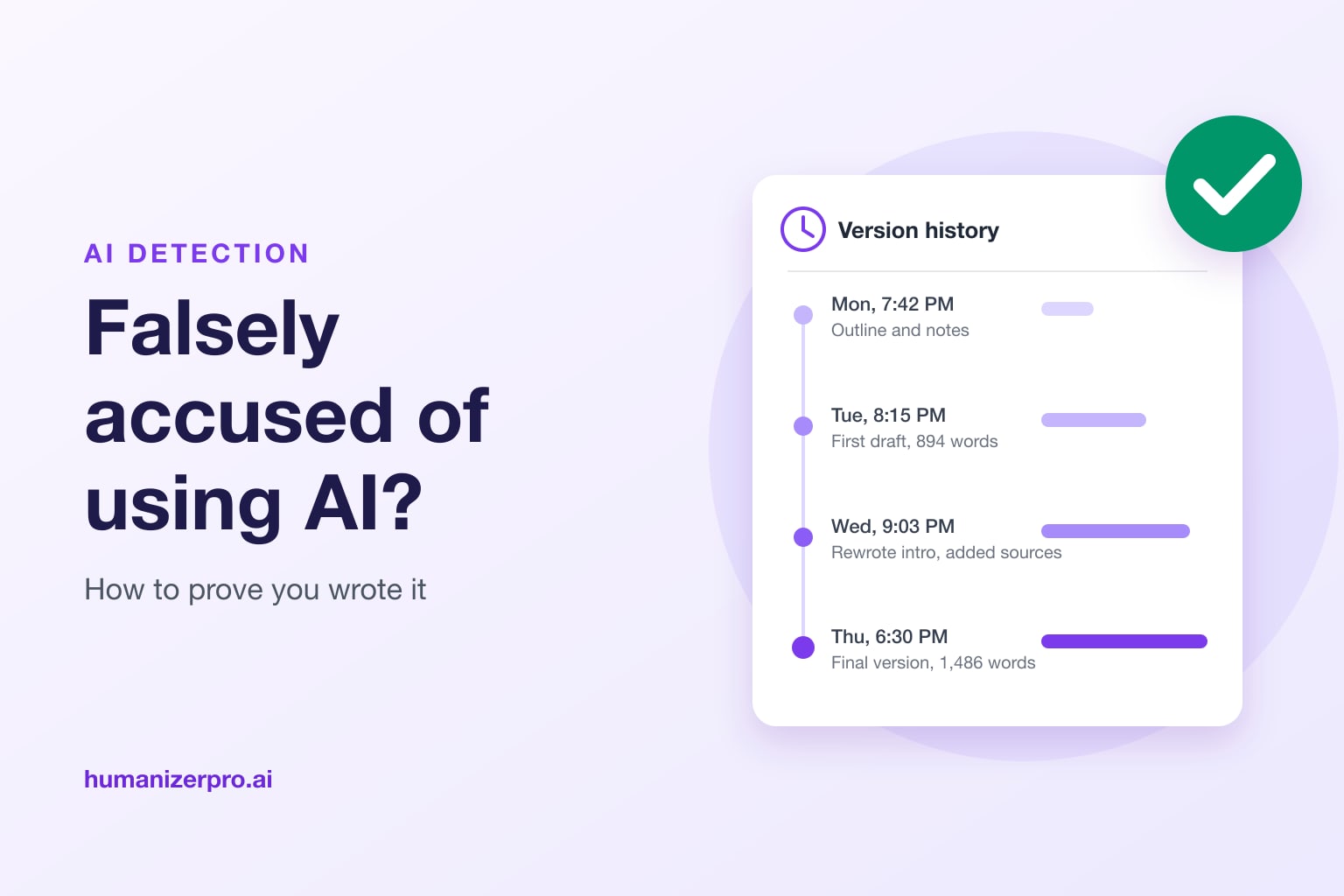
If you're falsely accused of using AI, the best proof that you wrote something yourself is your writing process: version history in Google Docs or Word, drafts, notes, outlines and research history. Ask to see exactly what was flagged, keep every file, explain how you wrote the piece, and offer to discuss it or write a short sample in person. An AI detector score on its own isn't proof, and most schools and detector makers say it shouldn't be treated as proof.
Key takeaways
- Don't panic, don't delete anything and don't admit to something you didn't do.
- Version history is your strongest evidence, because it shows the text being written over time instead of pasted in at once.
- Drafts, notes, sources and your ability to explain your own argument all support your case.
- AI detectors are known to produce false positives, especially on formal writing and writing by non-native English speakers.
- Follow your school's process, ask for the evidence in writing, and appeal if the decision rests on a detector score alone.
First steps: what to do in the first 24 hours
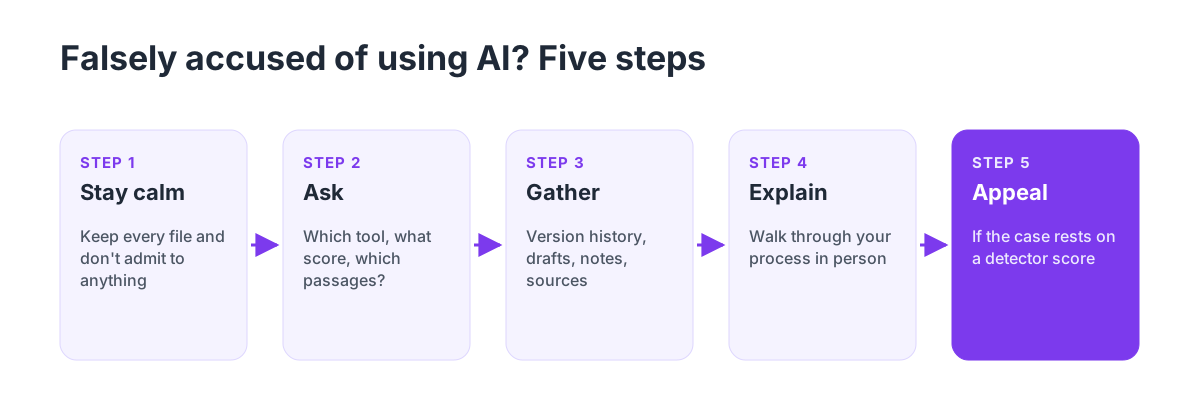
If you've been falsely accused of using AI, it's stressful, and it's easy to react in ways that make the process worse. These first steps protect you:
- Stay calm and stay polite. Your instructor is probably following a process, not attacking you. A calm, organized response is far more convincing than an angry one.
- Don't admit to something you didn't do. Some students agree to a penalty just to make the problem go away. That admission can end up on your record.
- Don't delete or edit anything. Keep the original file, every draft and your browser history exactly as they are. Changing files now can look like you're hiding something.
- Ask for the specifics. Find out which tool was used, what score it gave, which passages were flagged and which policy you're said to have broken.
- Read your school's AI policy. Check what counts as misuse, whether tools like Grammarly are allowed, and what the formal process looks like.
Evidence that proves you wrote it yourself
The goal is to reveal the process behind the writing, not just the finished product. AI produces blocks of text in a single go, whereas human writing develops step by step, with additions, deletions, pauses and rewrites.
| Evidence | Where to find it | Why it helps |
|---|---|---|
| Google Docs version history | File, then Version history, then See version history | Shows the document growing over hours or days, with timestamps |
| Word version history | File, then Info, then Version History (files saved to OneDrive or SharePoint) | Shows saved versions of the document over time |
| Writing replay tools | Draftback for Google Docs, Grammarly Authorship | Replays your typing, and can show what was typed versus pasted |
| Drafts and outlines | Old files, notebooks, printouts | Shows your ideas developing before the final version |
| Research history | Browser history, library database logs, saved PDFs | Shows the reading behind your sources |
| Notes and messages | Notes apps, emails to your tutor, study group chats | Shows you discussed or planned the work |
| Past writing | Earlier assignments and exams | Shows your usual style and vocabulary |
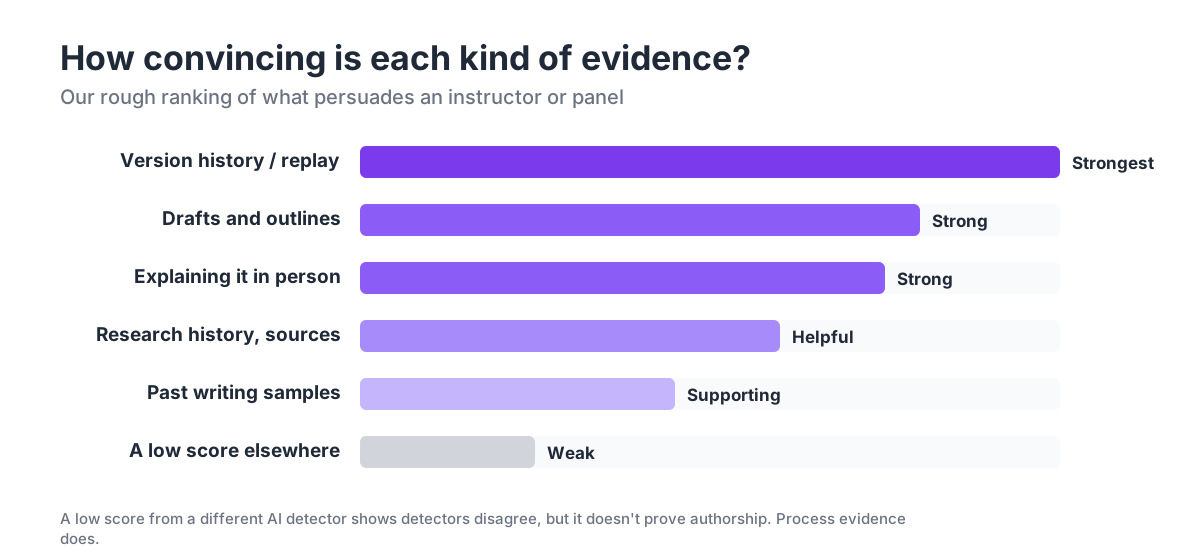
Version history is by far the strongest. A document that was typed over three evenings, with sentences rewritten and paragraphs moved around, looks nothing like a document where 1,500 words appeared in a single paste. If you wrote in a tool without history, such as a basic text editor, lean more heavily on drafts, notes and your ability to explain the work.
How to explain your work in a meeting
Many cases are resolved in a simple conversation with the instructor, and this is usually where the writer who did the work comes across best. Be prepared to:
- Walk through your process. Explain when you started, where you found your sources and how the structure changed.
- Explain your argument in your own words. Summarize your main points without looking at the paper.
- Define terms and explain choices. Why did you use this source? What does this concept mean? Why this example?
- Point to personal details. Class discussions, lectures or experiences you drew on are hard for AI to invent.
- Offer a live writing sample. Suggest writing a short response on the same topic under supervision. It's one of the most convincing things you can do.
Bring your evidence printed or ready on a laptop, and keep it organized by date.
Explain why the detector may be wrong
AI detectors don't know who wrote a text. They estimate how predictable it looks to a language model, and that estimate is frequently wrong on human writing. It's worth pointing out, calmly and factually, that:
- Detector makers say scores aren't proof. Turnitin tells instructors not to use its AI score as the sole basis for action against a student, and hides scores under 20% because they're unreliable.
- False positives are well documented. A 2023 Stanford study found detectors flagged 61% of essays by non-native English writers as AI-generated. OpenAI withdrew its own AI text classifier in 2023 because of low accuracy.
- Certain writing is flagged more often. Formal, technical or formulaic writing, short assignments and text polished by grammar tools are all more likely to be misread.
- Chatbots can't identify their own writing. In a widely reported 2023 case, a professor pasted student essays into ChatGPT and asked whether it had written them. ChatGPT can't reliably answer that question, so its "yes" is not evidence.
We summarize the research in are AI detectors accurate?, and explain the signals detectors rely on in perplexity and burstiness explained. If Turnitin flagged you, our Turnitin AI checker guide explains exactly what its score means.
What to write to your instructor
A short, respectful email that asks for specifics and offers evidence sets the right tone. You can adapt this template:
Subject: Question about the AI flag on my [assignment name]
Dear Professor [Name],
Thank you for letting me know that my [assignment] was flagged for possible AI use. I wrote this assignment myself and I'd like the chance to show you how I worked on it.
Could you share which tool was used, the score it gave and which passages were flagged? I have the Google Docs version history for the document, my notes and outline, and the sources I used, and I'm happy to walk you through them or write a short response on the topic in person.
I know AI detectors can produce false positives, and I'd appreciate the chance to discuss this before any decision is made. Would you be available to meet this week?
Best regards,
[Your name]
Stick to the facts. Don't accuse the instructor of bias in your first message, and don't threaten to go over their head.
If it becomes a formal case
If the issue goes to an academic integrity panel, take it seriously and prepare the same way you would for any hearing:
- Ask for the evidence in writing, including the detector report and the exact allegation.
- Get support. Most universities have a student advocate, ombudsperson or student union adviser who can help you prepare.
- Submit your evidence in an organized way, with version history screenshots, drafts and a short written timeline of how you completed the work.
- Point to policy. Many schools require more than a detector score to find a student responsible. Quote the relevant parts of the policy.
- Appeal if needed. If the decision relied mainly on a detector score, you usually have the right to appeal it.
If you're a freelancer or employee
Writers get flagged by clients and editors too, often after a client runs work through a strict tool such as Originality.ai. In our Originality.ai review, it rated a human-written 2022 blog post, published before ChatGPT existed, as 60% AI.
The plan works the same way: share your Google Docs history, drafts and research notes, and offer a short, paid test piece written live. It also helps to agree before you sign a contract or accept a brief how AI detection will work, which software the client relies on and what happens if a piece is flagged.
How to avoid false AI flags in the future
You shouldn't have to change how you write to satisfy a detector, but a few habits make any future accusation easy to answer:
- Write in Google Docs or Word online so version history records your process automatically.
- Keep your notes, outlines and sources until the grade is final.
- Be careful with rewriting tools. Heavy use of paraphrasers such as QuillBot, or Grammarly's rewrite features, can make your own writing look AI-paraphrased. Our Grammarly AI humanizer review explains why.
- Vary your sentences and use specifics. Mix short and long sentences, and use your own examples and opinions.
- Cite properly. If you used AI for brainstorming and your course allows it, disclose it and cite it. Our guide to avoiding plagiarism when using AI shows how to cite ChatGPT.
- Check your work before you submit. Running your draft through an AI detector and a plagiarism checker shows you what a teacher's tools might react to.
Check your essay before your teacher does. HumanizerPRO's free AI detector highlights the exact sentences that read as AI-written, so you can revise them or keep your evidence ready. Its plagiarism checker is free too.
If your natural writing keeps getting flagged, the most effective fix is often just to vary your sentence lengths and use more specific details. Some writers also feed the flagged sentences through an AI humanizer to see how the same argument reads with a more natural rhythm, then reword the result in their own voice. We explain how that works in what AI humanization is. Check your course rules first, as some instructors regard any online rewriting tool as too much assistance.
Frequently asked questions
How do I prove I didn't use AI?
Demonstrate your writing process. The most convincing evidence is Google Docs or Word version history, which shows when the writing was actually produced. Drafts, notes, search history and being able to explain your argument out loud are all valuable too.
Can a teacher fail you based on an AI detector alone?
It depends on your school, but many policies require more than a detector score, and Turnitin itself says its AI score shouldn't be the sole basis for action against a student. If a penalty relies only on a detector result, you can usually appeal.
Does Google Docs version history prove I wrote it?
It's strong evidence. Version history shows the document growing over time with timestamps, which is very different from AI text pasted in at once. Tools like Draftback can replay the whole writing process.
Can Grammarly make my writing look like AI?
Yes, it can. Accepting lots of Grammarly rewrite suggestions, or using paraphrasing tools like QuillBot, can give your writing the smooth, even rhythm that AI detectors associate with AI text. Basic spelling and grammar fixes are much less likely to cause problems.
What should I say to my professor if I'm falsely accused?
Keep calm, state plainly that you wrote the work, ask which tool and passages were flagged, and produce your evidence: version history, drafts, notes and sources. Being willing to discuss the essay or write a short sample under supervision is highly persuasive.
Can AI detectors be wrong?
Yes. False positives are well documented. A Stanford study found detectors flagged 61% of essays by non-native English writers as AI, and OpenAI withdrew its own detector because of low accuracy.
Is there a free AI detector to check my work before submitting?
Yes. HumanizerPRO (humanizerpro.ai) is a free AI humanizer with a built-in AI detector, plagiarism checker and fact checker. Its detector shows which sentences read as AI-written, so you can check your work before you hand it in.

Kamran Khan
Kamran Khan is the founder of HumanizerPRO and a leading voice in the ethical use of AI-generated content. With years of hands-on experience in AI, SEO, and digital publishing, he built HumanizerPRO to help creators and professionals turn robotic AI text into clear, human-like writing that meets real-world standards.